For most of my career, my job has been taking friction out: one cart for every Adobe cloud instead of three checkouts, one calm app instead of a crowded inbox for school.
Last month I started building something where friction is the whole point.
Peek is a stealth game for iPhone, and the door is the controller. You hide behind a door and open it to watch. Open it wider to see more, and you’re easier to spot. On an iPhone Duo, the phone itself is the door.
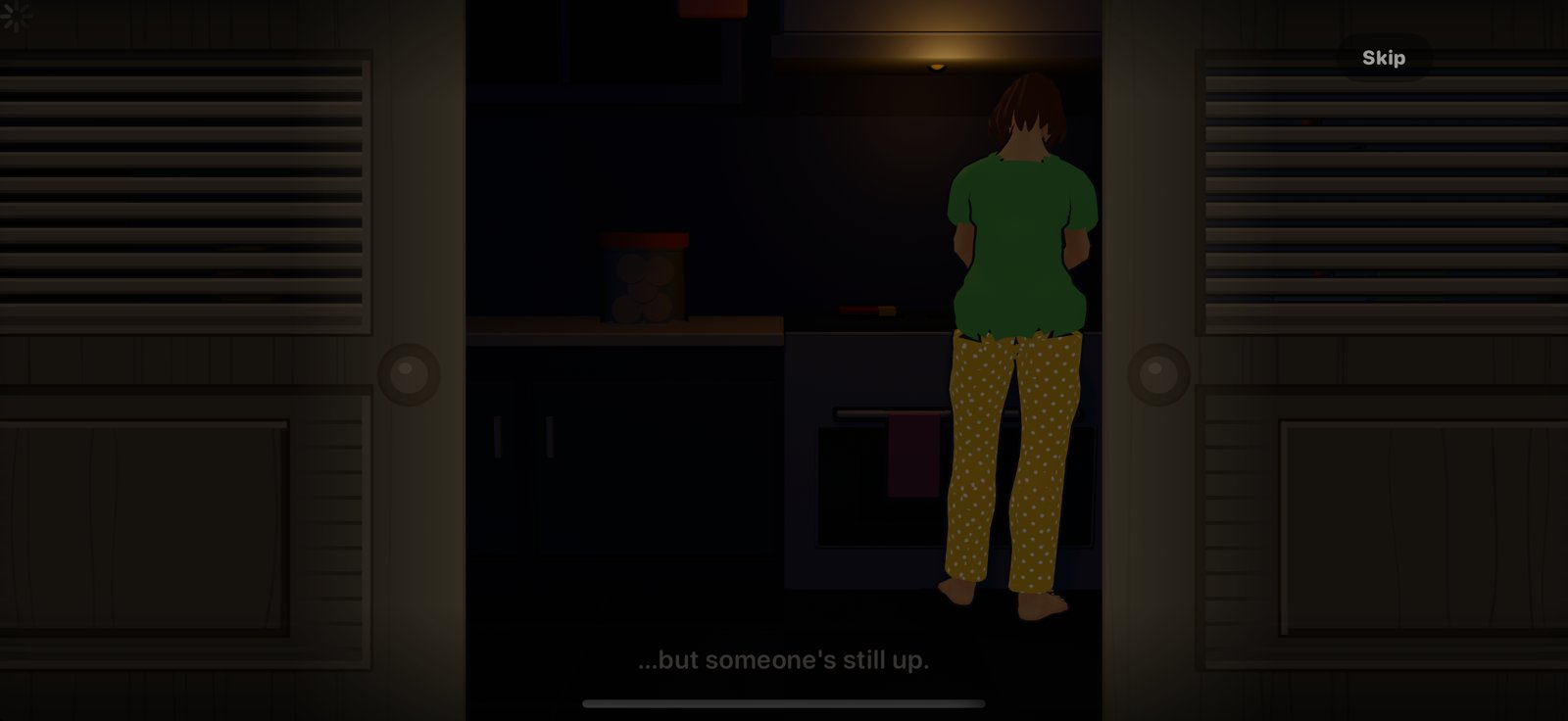
I’m building it on my own with Claude Code, the way I build Morning. But a game asked for things I had never designed before.
I had never built a character. The Midnight Snack has a family, the bank has a guard, and the shop has mannequins that move when you look away. Each starts as a free rigged figure from Quaternius, with walks and turns from its animation library, drawn flat with ink outlines so it reads like a cartoon.
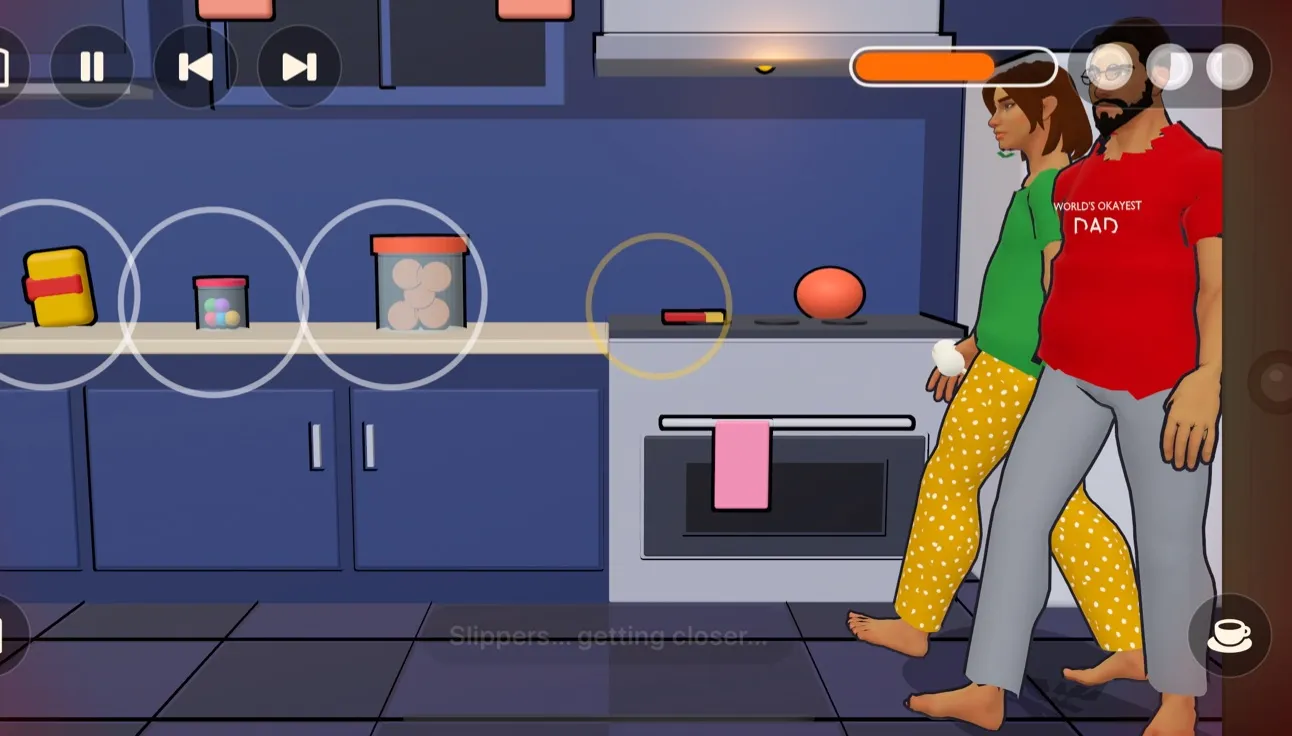
The hardest lesson was staging. Placing each character by hand never looked right, so now the game sizes and lights every character from the room itself, and a new one looks right anywhere without me touching it.
Sound matters most to me, because it changes the way you play. In the Midnight Snack, you often hear the family before you see them: slippers, getting closer.
To make worlds faster, I built Peek Studio, a web app beside the game. Every world, its nights, its script and its sounds live there, and one button installs a new build on my iPhone.
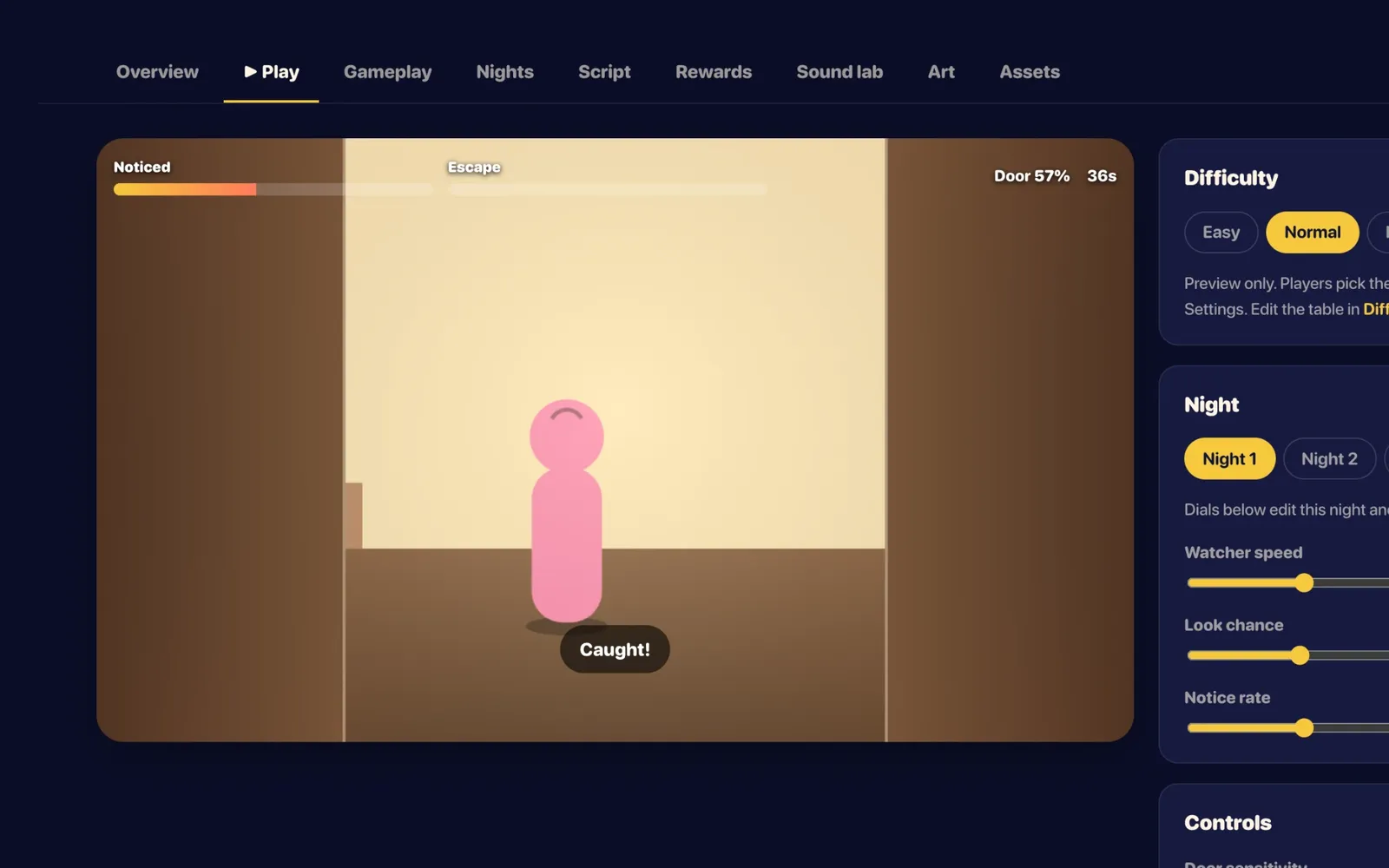
Right now I’m tuning each night: how fast each watcher walks, how often they glance at the door, how quickly the eye meter fills. In product design, I’d tune until nothing surprised you. Here I’m tuning for a catch that surprises you but still feels fair.
It turns out friction is a design problem too. The work is deciding exactly how much, and where.
Next, I want to put Peek on TestFlight for friends and family, and try the hinge on a real iPhone Duo.